
Climbing Safaris in Africa
Mount Kilimanjaro, standing at 5,895 meters (19,341 ft), is the highest peak in Africa and the tallest free-standing mountain in the world. Located in northern Tanzania near the Kenyan border, it’s a centerpiece of many climbing safaris. Climbers traverse five distinct ecological zones—from lush rainforest to alpine desert and arctic summit—without needing technical mountaineering skills, making it accessible to determined trekkers. Popular routes include the Lemosho and Rongai, known for high summit success rates and scenic diversity. The climb typically takes 5–9 days, allowing for proper acclimatization. After summiting Uhuru Peak, many travelers reward themselves with a wildlife safari in the nearby Serengeti or Ngorongoro Crater
Africa’s second-highest peak at 5,199 meters (17,057 ft), Mount Kenya is a rugged, snow-capped extinct volcano in central Kenya. It offers both non-technical treks to Point Lenana (4,985 m) and technical climbs to Batian and Nelion, which require ropes and ice axes. The mountain lies within Mount Kenya National Park, a UNESCO World Heritage Site, and features glaciers, alpine meadows, and unique flora like giant lobelias. Wildlife such as elephants, buffaloes, and colobus monkeys can be spotted on lower slopes. The Sirimon, Chogoria, and Naro Moru routes each offer distinct scenery and challenges, with treks lasting 4–6 days.
Known as the "Mountains of the Moon", the Rwenzori range straddles the border between Uganda and the Democratic Republic of the Congo. With peaks reaching up to 5,109 meters (Margherita Peak), it’s Africa’s third-highest mountain and one of the most scenic and challenging climbs on the continent. The ascent is physically demanding due to steep, muddy terrain and frequent rainfall, but climbers are rewarded with views of glacial lakes, waterfalls, and Afro-alpine vegetation. The 6-day Central Circuit and Margherita Peak climb from Kilembe Base Camp is the most popular route. This climb is often combined with gorilla trekking in Bwindi or Mgahinga National Park.
The Virunga Massif is a chain of eight volcanoes spanning Uganda, Rwanda, and DR Congo. Several of these are accessible for climbing, offering dramatic volcanic landscapes and the chance to see mountain gorillas and golden monkeys. Mount Karisimbi (4,507 m) – Rwanda’s highest peak, requiring a 2-day hike with overnight camping. The summit offers views into its crater lake. Mount Bisoke (3,711 m) – A day hike in Rwanda or DR Congo, famous for its pristine crater lake. Mount Muhabura (4,127 m) and Mount Sabinyo (3,674 m) – Accessible from Uganda’s Mgahinga Gorilla National Park, both offer intermediate hikes with border-crossing summits and cultural encounters with the Batwa people. Climbing here is often combined with gorilla trekking, making it a unique dual-adventure experience.
At 4,566 meters (14,980 ft), Mount Meru is Tanzania’s second-highest peak and an excellent acclimatization climb before tackling Kilimanjaro. Located in Arusha National Park, it offers rich wildlife sightings—buffalo, giraffe, colobus monkeys, and even leopards—along its lower slopes. The 3-day trek via the Momella Route takes climbers through montane forest, moorland, and alpine desert to the summit, with panoramic views of Kilimanjaro on clear days. Less crowded than Kili, Mount Meru provides a quieter, more intimate climbing experience
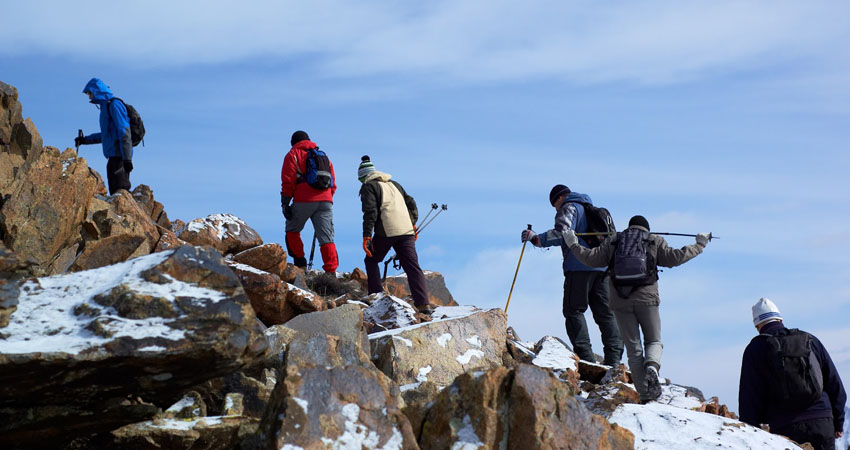
Climbing safaris in Africa are typically organized by our experienced tour guides who provide guides, porters, permits, and equipment. Key considerations include:
Best Time to Climb: Dry seasons (June–October, December–February) offer safer and clearer conditions.
Fitness Level: Most climbs require good physical condition, especially for high-altitude treks.
Packing Essentials: Hiking boots, warm layers, rain gear, gloves, and a camera.
Health & Safety: Acclimatization is critical to avoid altitude sickness. Travelers should consult health advisories (e.g., CDC) for vaccinations and preventive care.
Many itineraries combine climbing with wildlife safaris, cultural visits, or beach relaxation in Zanzibar, creating a well-rounded African adventure.
